Use additive manufacturing where it removes waste from the decision cycle.
Sculpteo treats sustainability as an engineering operating choice, not a decorative claim. The practical question is simple: can the part be tested with fewer tooling loops, consolidated into fewer assemblies, ordered closer to demand, or produced with a process that avoids unnecessary stock? When the answer is yes, additive manufacturing can reduce waste while giving the buyer better information.
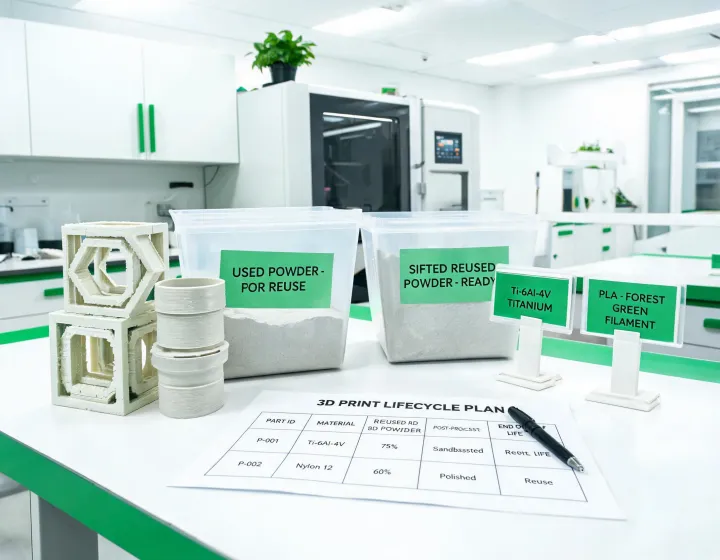
Better part decisions can be a lower-waste manufacturing strategy.
Traditional procurement often waits until a project is mature enough for tooling, then discovers that assembly clearance, cable routing, surface feel, or operator handling still needs revision. Sculpteo helps teams move those discoveries earlier. A printed bracket can verify access before a metal tool exists. A resin enclosure can test user handling before a mold is cut. A nylon fixture can support a production line while the permanent tool is being revised. None of these examples make additive manufacturing automatically greener; they show where additive manufacturing can remove avoidable loops.
Responsible AM starts with a smaller question: what decision does this print help us avoid repeating?
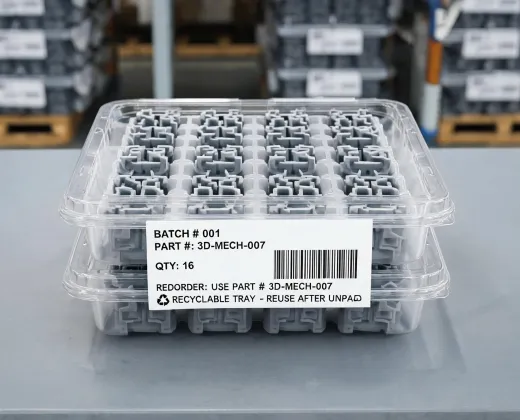
The same thinking applies to repeat orders. When a team stores the material, finish, and inspection assumptions attached to a build, it avoids unnecessary redesign, resampling, and over-ordering. That is why the Sculpteo workflow focuses on clear documentation as much as print speed.
How buyers can make lower-waste AM choices.
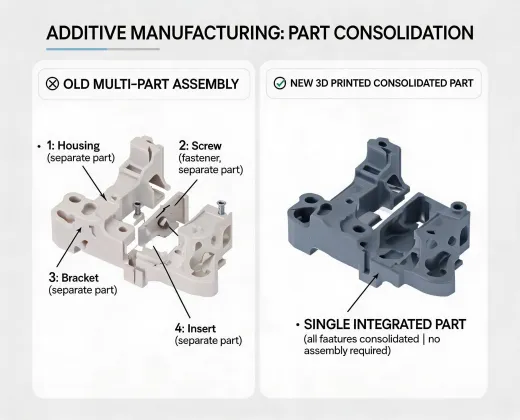
Consolidate only when serviceability remains clear.
Combining parts can reduce assembly and fasteners, but the team should still consider repair access, cleaning, inspection, and replacement cost.
Choose finish level by function.
A prototype used for fit may not need a cosmetic finish. A customer-facing model may need smoothing and color. Naming that difference reduces over-processing.
Order the quantity the learning cycle needs.
Small AM batches can prevent overbuying when a design is still changing. Repeat orders can scale once the part route is stable.
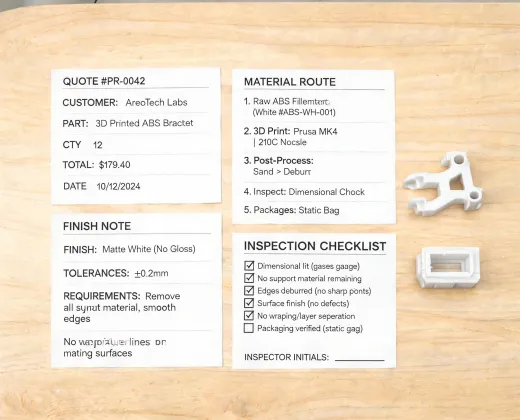
Keep build assumptions with the reorder.
Material, orientation, finish, and inspection notes help avoid remaking samples just because the original context was lost.
Small improvements across the project desk.
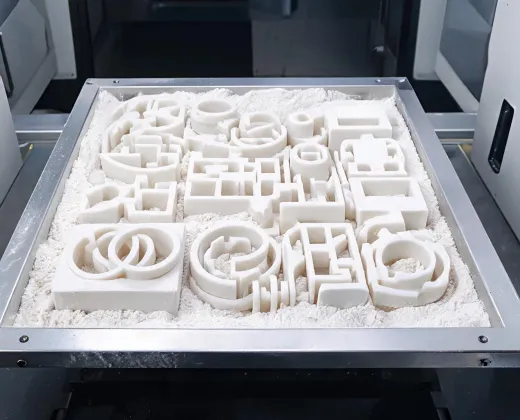
Ask which AM route reduces iteration, over-processing, or unnecessary stock.
Share the part purpose and what decision the print must answer. Sculpteo can help separate prototype learning, bridge production, and repeat-buy logic so the order is sized to the real need.